

Drone4Build: Building the Future of Construction Skills 2nd Transnational Meeting in Madrid

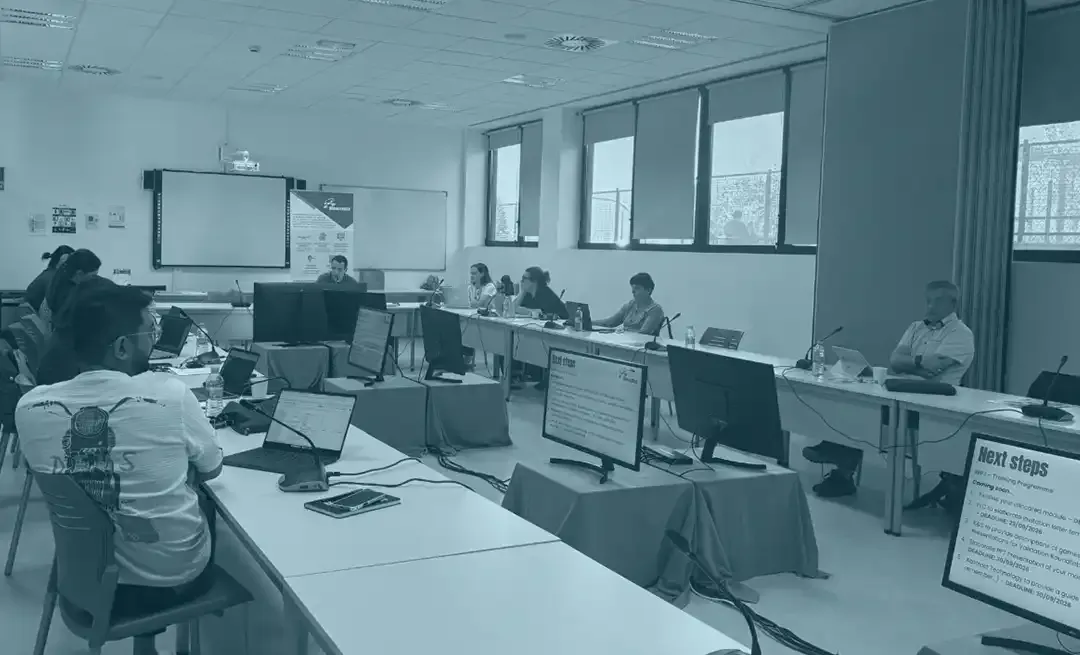
The Drone4Build consortium recently gathered in Madrid for its 2nd Transnational Partners Meeting, bringing together all seven European partners on 17-18 September 2026 to advance one of the most hands-on Erasmus+ projects we've been part of - one that sits right at the intersection of construction, vocational training, and drone technology.





The partnership unites a diverse and complementary group of organisations from across Europe: Abstract-Technology GmbH (Germany), PEDMEDE (Greece), Hellenic Drones S.A. (Greece), Fundación Laboral de la Construcción (Spain), IIPLE – Scuola Edile di Bologna (Italy), The Knowledge and Skills Management Centre, and Bau Bildung Sachsen e.V. (Germany).
Hosted by the Fundación Laboral de la Construcción

This meeting was hosted by the Fundación Laboral de la Construcción (FLC), a Spain based organisation that provides professional training, promotes health and safety, and manages employment services for the construction sector.
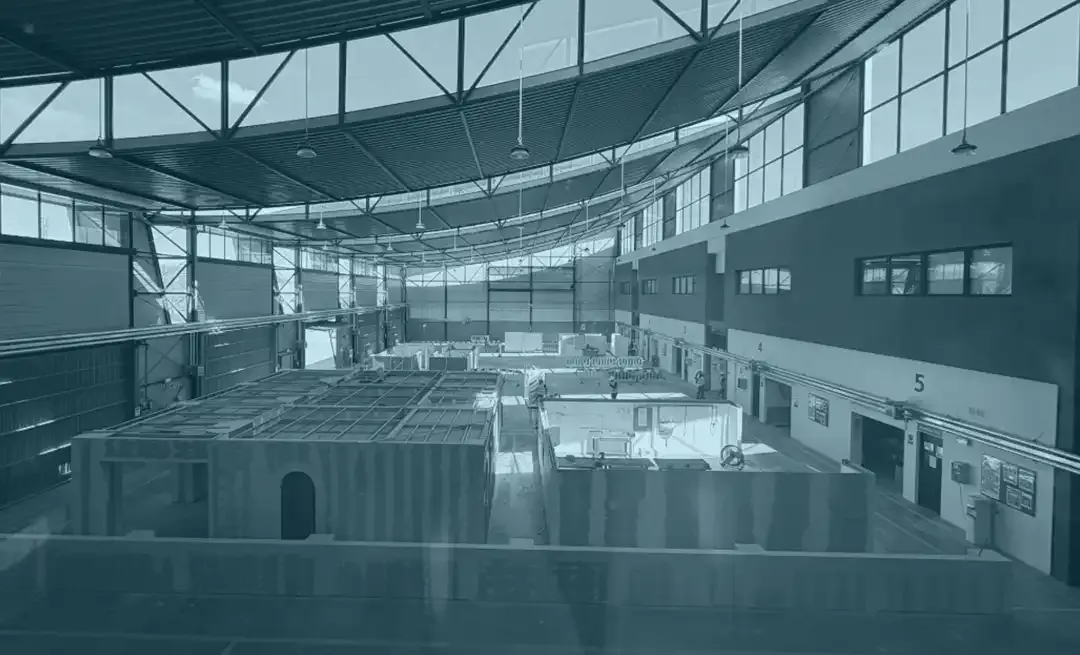
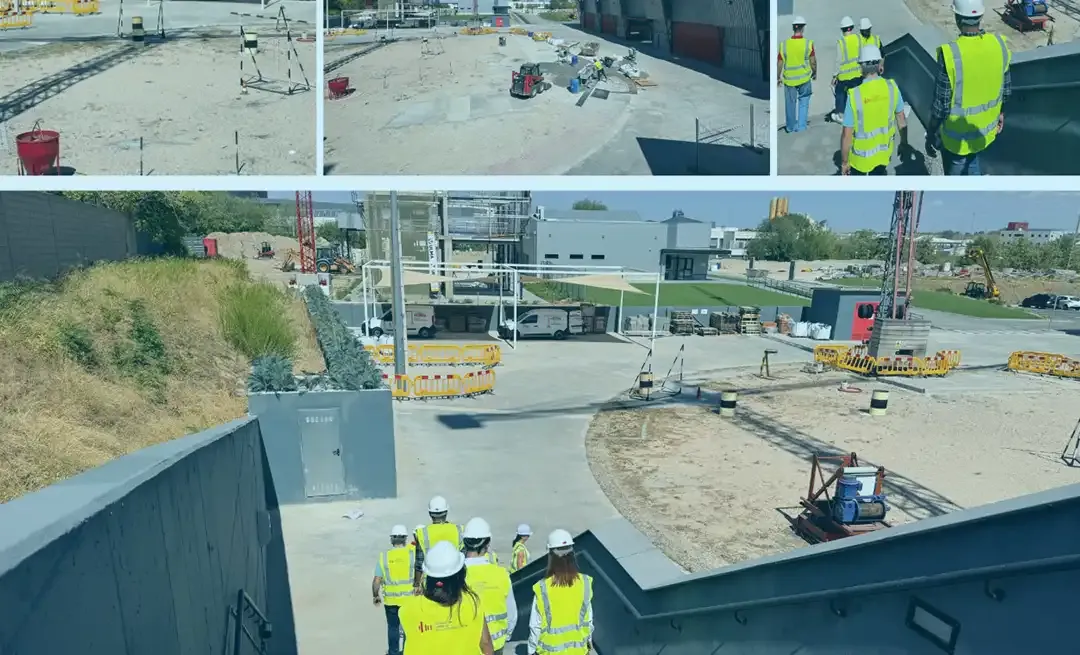
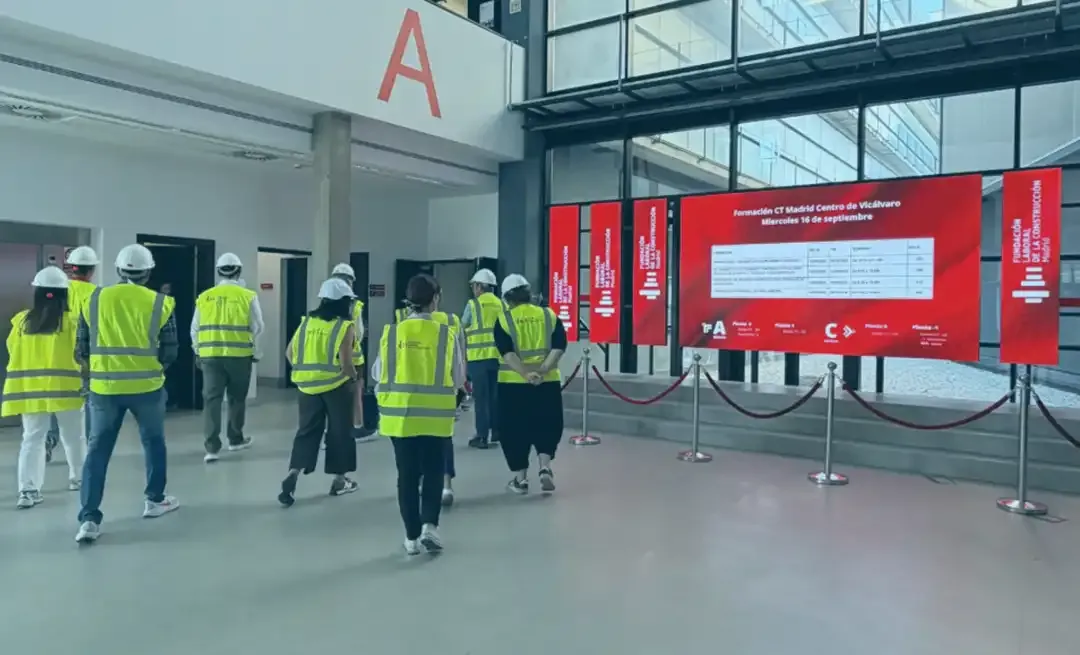
FLC organised a guided tour through its training institute - and the scale was genuinely impressive. We visited dedicated workshops for construction workers, electricians, welders, and bricklayers, alongside the theoretical learning areas. Outside, the training ground featured cranes, forklift trucks, stackers, and the full range of safety equipment you'd find on a real building site.

Consortium Group photo taken before visiting the training & work areas, in accordance with the safety measures in place at the institute; everyone is wearing overalls and a hard hat. From l. to r. Luisa, Gemma, Sara, Max, Esmeralda, Aspasia, Beatríz, Lea, Stefania, Roman, Jaimin and Alex.
FLC's vocational training programmes (Formación Profesional, FP) typically run for two years and lead to recognised qualifications, including Grados Básicos (building maintenance), Grados Medios (construction technician), and Grados Superiores (risk prevention technician). The Foundation also delivers shorter, certified specialisations in areas such as safety and health. Remarkably, all programmes are free of charge for students - the main prerequisite being a concrete command of Spanish language, which is mandatory across all courses.
The scale is impressive: in the past year alone, FLC has officially certified over 130,000 professionals. Visiting the centre, it was easy to see how - the facility operates at a scale closer to a real construction site than a traditional classroom, with full-size cranes, welding stations, and electrician workshops running simultaneously. It is exactly the kind of environment where theory meets practice, and where the future of construction training is already being shaped today.
This reflects a profession that is well paid, heavily funded, and in high demand across Europe, and one where precision and health and safety are central to the work. A number of this importance naturally invites deeper reflection, on how certification works across borders, how language barriers can be supported, and how vocational training must be aligned between European nations. It also highlights an important, ongoing challenge: opening this traditionally male-dominated sector to more women.

Visiting the various study areas and technical workspaces, such as these booths for welders, mechanics, etc., or the electrical workspaces at the FLC centre
A Project Built on Solid Foundations
We are proud to partner in this Drone4Build consortium, and proud to be part of a project in which drones in construction take centre stage as a driver of safer, smarter, and more sustainable ways of working.
By the time we sat down in Madrid, Drone4Build had already delivered a strong body of foundational work. K&S and Hellenic Drones presented the completed results from all three WP2 research activities (A2.1, A2.2, and A2.3):
- The Strategic Report on Drone Skills in the Construction Sector - a comprehensive analysis drawing on interviews with drone professionals and construction stakeholders across five countries, identifying critical skills gaps and mapping workforce development requirements through 2030. The research confirmed that Europe will need over 15,000 additional trained professionals in hybrid drone-data-BIM roles as an immediate priority, rising to 30,000+ by the end of the decade.
- The Integrated Report on Stakeholder Engagement Workshops - consolidating findings from validation workshops held in Italy, Spain, North Macedonia, Greece, and Germany, with a total of 126 stakeholders - drone specialists, construction professionals, VET providers, and industry experts - validating the project's direction and training priorities.
- The Drone Competency Framework, aligned with the European Commission's DigComp 3.0 standard, defining 6 competency domains, 24 competency areas, and over 80 specific competency descriptors - from operational flight skills and data processing to BIM integration, thermal analysis, regulatory compliance, and professional soft skills.
All reports are available for download at drone4build.eu/en/results.
Work Package 3: The Drone4Build Training Programme
The core focus of the Madrid meeting was Work Package 3 - the training programme itself. Led by FLC, with the distance-learning platform led by Abstract-Technology, the programme is structured into 4 courses and 8 modules:
- Foundations of Drone Operations for Construction and Renovation
- Drone-Based Building Inspection and Energy Assessment
- Drone Data Processing, BIM and Digital Construction Workflows
- Advanced Drone Applications for Sustainable Construction
The learning path guides students on a progressive journey. Course 1 begins with theoretical foundations, equipment details and drone typologies for civic use, and advances into safe piloting, mission planning, and regulatory compliance. From there, learners move into course 2 for the theoretical and descriptive knowledge needed to prepare them for later practical applications: inspecting buildings via drone flights, and using advanced modules on thermography and energy audits.
Courses 3 and 4 raise the technical ambition further. Course 3 develops learners' capacity to convert drone data into digital assets that support renovation and construction management, integrating data into tools such as BIM and GIS. Course 4 prepares learners to implement drone-enabled innovation strategies for sustainable construction and renovation, for example, using AI to assist inspection, alongside other emerging technologies.
In the final phases of the learning path, students will master the project-management approach for deploying drones in construction: from cost definition to data storage, from sustainable asset management to contributing to the objectives of the European Green Deal.
Learning Through Simulation
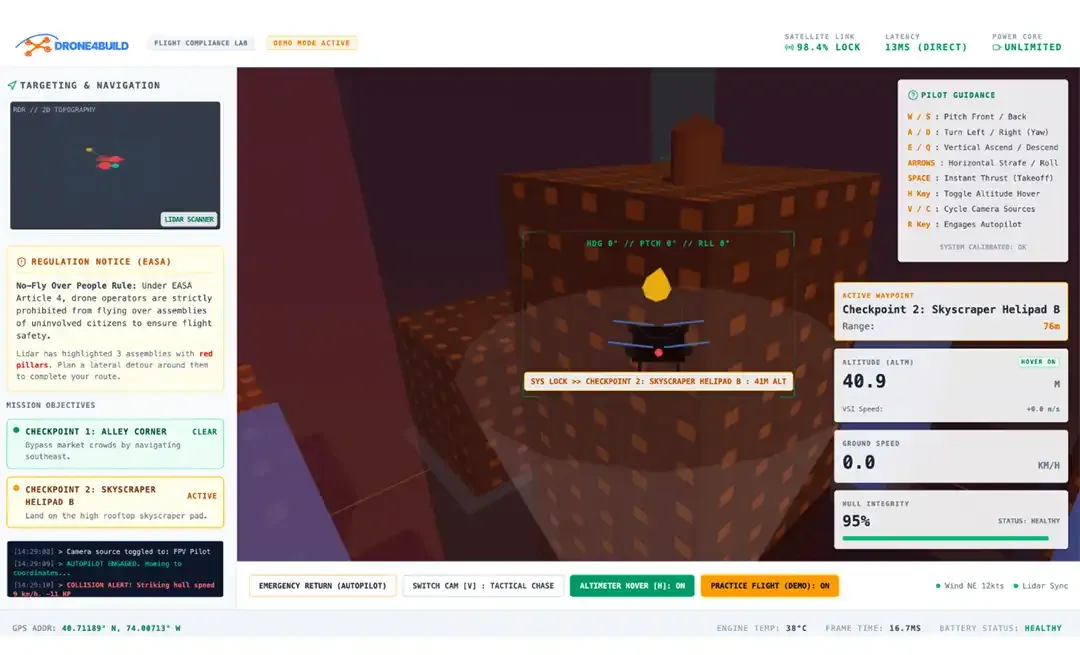
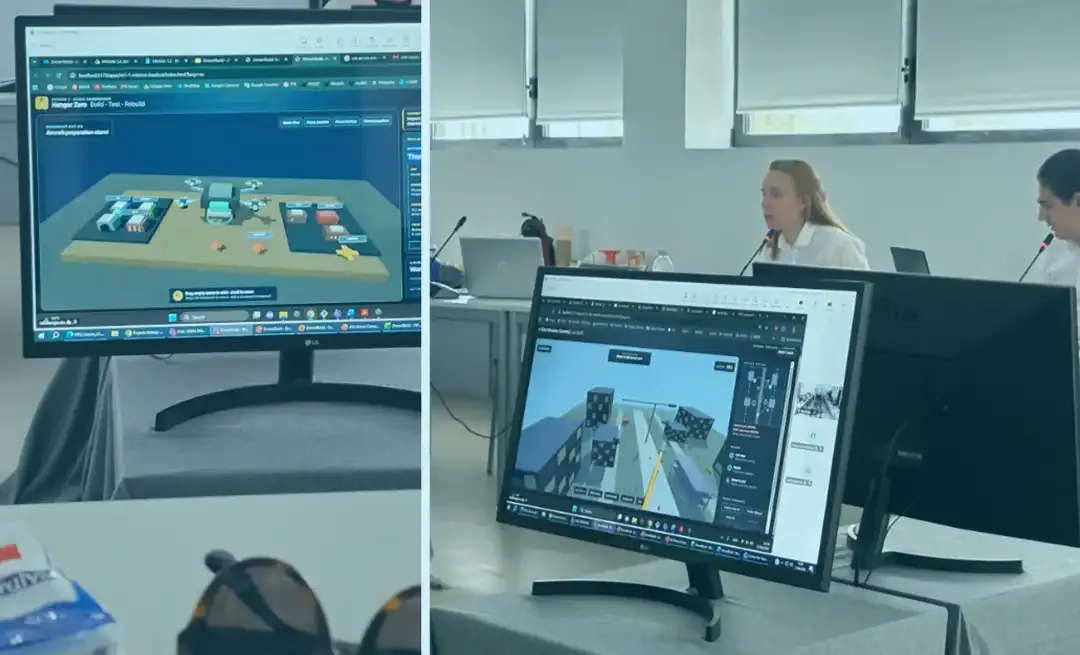
A distinctive strength of this online learning path is its interactivity. In collaboration with the Knowledge and Skills Management Centre (K&S North Macedonia), we are developing eight simulation based activities - one for each module. Integrated directly into the learning platform, these gamified simulator experiences, together with other interactive activities, are designed to engage students more deeply and drive higher, more effective learning outcomes.
Why Drones, and Why Now
The case for drones in construction is compelling. They improve worker safety by flying over roofs, unstable ground, and tall structures instead of putting people at risk. They map large areas faster, and they reduce costs by collecting data more quickly than manual methods. With the European drone market projected to exceed €10 billion per year and create over 100,000 direct jobs in the coming decade, the skills gap is real and urgent.
Our own research across five European countries confirmed what the industry already feels: drone adoption in construction is growing rapidly - in Italy alone, the sector saw a 23% increase in drone use over just two years - yet the workforce is not keeping pace. The bottleneck is no longer the technology itself, but the ability to turn drone-collected data into actionable decisions: photogrammetry, BIM integration, regulatory compliance, and construction-specific operational planning.
Through Drone4Build, our aim is to inspire a new generation to pursue certification in a sector where technology, emerging tools, and AI, combined with hands-on, practical experience, can help close the skills gap in one of Europe's most in-demand industries.
Looking Ahead: Athens
Following this milestone, the 3rd Transnational Meeting will take place in Athens, centred on an on-site demonstration of the project, teaching the technology to the teachers themselves, in a genuine "train the trainer" approach.
We look forward to that moment with great anticipation, and to continuing to build, together, the future of skills for European construction.
The social events are also an important part of a transnational meeting - and Madrid did not disappoint. After a long and productive day of presentations, discussions, and facility tours, the consortium headed to Mercado de la Reina, a vibrant restaurant and market space on the iconic Gran Vía in the heart of Madrid. Over plates of Spanish cuisine, conversations shifted from competency frameworks to personal stories, travel anecdotes, and plans well beyond the project timeline. It is moments like these that turn a consortium of seven organisations into a genuine team.


Our team on-site
Project Coordination at its Best!
The Abstract-Technology team was represented by Jaimin Pavashiya, who is responsible for project management, and Stefania Trabucchi, who is the project coordinator for the Erasmus+ Consortium. Drone4Build is co-funded by the Erasmus+ Programme of the European Union. The project represents a collaborative effort to transform construction education and practices across Europe through innovative digital skills development.
Our team on-site
Project Coordination at its Best!
The Abstract-Technology team was represented by Jaimin Pavashiya, who is responsible for project management, and Stefania Trabucchi, who is the project coordinator for the Erasmus+ Consortium. Drone4Build is co-funded by the Erasmus+ Programme of the European Union. The project represents a collaborative effort to transform construction education and practices across Europe through innovative digital skills development.